Thursday, August 2, 2018

When Johnny Doesn't Come Marching Home....

The recent return of several hundred remains of US service personnel from North Korea is a commendable move for the Communist dictatorship. The return of these remains offers hope to families that have long wondered about the fate of their loved ones. The Korean War has often been referred to as the Forgotten War and many feel that the 8,000 plus servicemen that were designated as MIA have long been forgotten. The Korean War, or more properly Korean Conflict, was a police action carried out under the auspices of the United Nations. There was a lot of confusion among Americans about the purpose and objectives of this conflict. The military combined seasoned veterans with fresh recruits, many of them having been drafted, to face the small North Korean Army. Unfortunately, the North Koreans were augmented by both Chinese and Soviet forces. This was the closest the US came to a full out ground war against the major Communist powers. The conflict ended with an armistice, really just a pause in the fighting, and there was no permanent resolution of the conflict. The American public was even more confused about the end of the war and the missing soldiers and sailors were forgotten. The return of these remains is a positive step in honoring the men and women that sacrificed their all for their nation.
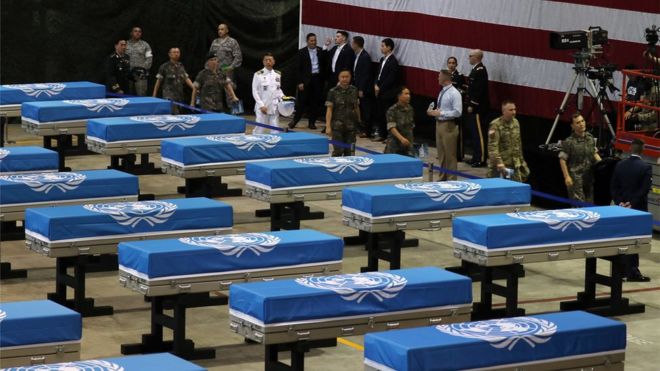

Of course, the several hundred remains are just a drop in the bucket compared with the over 8,000 missing servicemen. A large portion of the missing servicemen will never be reclaimed. This is not only true of the Korean War, but of every other American conflict. There have been MIAs in nearly every American conflict. There were hundreds of thousands of MIAs after the American Civil War. It was the Civil War that eventually led the US military to adopt standardized IDs, i.e. dog tags. Soldiers prior to battle in the American Civil War would pin strips of paper to their clothes with their name and address in case they were killed in battle. The average soldier came to fear being killed and forgotten on the massive fields of carnage. A much smaller number of MIAs were recorded in the Great War, but in the aftermath of that war the practice of recognizing an Unknown Soldier began. The Unknown Soldier, entombed in Washington DC, was the ultimate symbol of the soldier who was not only lost in battle, but the man who also lost his identity in the process. The Tomb of the Unknown Soldier came to represent all MIAs.


Today, the US military strives to identify the remains of all soldiers that are found in former conflict zones. They also work hard to eliminate once and for all the issue of MIAs. New techniques are employed to identify and track current soldiers. It is unlikely that the Tomb of the Unknowns will have a future addition due to these advances in technology. But that does not comfort those whose family members were lost in World War 2, Korea, or Vietnam. More than celebrate the return of remains from North Korea, the American public should take a moment to reflect on those who did sacrifice their lives in service. Memorials and museums dot the country, so it is not difficult to honor the men and women who were lost in defense of the US. Take time to go to places like the Andersonville Prison Museum that honors both POWs and MIAs throughout the history of the US. And let us also show our gratitude to current service personnel and their families as they still put their lives on the line for us all.
.

Monday, August 21, 2017

What Does the Bible Say About the 2017 Eclipse?

What does the Bible say about the 2017 eclipse? Absolutely nothing. In fact, eclipses are never really discussed in the Bible. There are a handful of passages that mention the sun darkening (Amos 8:9; Micah 3:6; Zech. 14:6; Joel 2:10, 3:15; Job 9:7), but they also mention the moon and stars darkening. The context of these passages indicates a supernatural event occurring rather than a natural event. Eclipses are a part of the natural order that God ordained. The reason we see no discussion in the Bible regarding eclipses is because Israel was commanded in the law not to engage in astrology. Deuteronomy 4:19 regards astrology as idolatry. The righteous were to look to God for guidance, not the stars.

Those claiming that the Eclipse is a sign of judgment are engaging in bad hermeneutics (consistent interpretation) as well as Christian astrology (which is an oxymoron). Eclipses happen every year or so. However,  since the majority of the earth is covered in water they do not always cross inhabited areas. The 2017 eclipse happens to cross a wide track of the US for the first time in 99 years. In 2 years it will cross the Pacific Ocean. Does that mean the Pacific Ocean will be under judgment in 2 years? Of course not.
Projected Path of 2019 Solar Eclipse

Some in the media are quick to point out that many traditions regard eclipses as bad omens, but history also shows that they can have positive consequences.
In 585 BC, Thales of Miletus accurately predicted an eclipse. This was not the first time this feat was accomplished, but it is the first recorded and verified instance of an eclipse prediction. A remarkable event occurred during that eclipse that helped preserve Thales accomplishment. The Lydians and Medes had been engaged in a long war. On May 28, 585 BC the Medes attacked the Lydians at the Halys River (in modern Turkey). They were engaged in battle when the eclipse transpired. The pagan soldiers were filled with superstitious dread and laid there weapons down. A peace treaty was then brokered because of the eclipse.


Outside of the civilized world an eclipse was a mysterious phenomenon that broke the regular order. Within civilized society an eclipse is part of the natural order and can be predicted with extreme precision. Christians are not supposed to be superstitious and should not react to an eclipse as though they were unenlightened pagans. Appreciate the orderly nature of God's creation and trust in God more than the prophets of doom trying to bank on headlines.

Thursday, November 3, 2016

I Got A Letter From Opponents of Religious Liberty and Free Speech

As an election approaches, there are certain things that I expect. I expect debates, constant annoying commercials, increasingly hostile Facebook memes, and tons of junk mail for various candidates. As a pastor I also expect a thinly veiled threat to arrive by mail. The letter is sent out every election season by Americans United for Separation of Church and State. The director of this organization purports to offer a helpful reminder of what churches can and can't do during an election season. Pastors can talk about issues (though he warns voter guides are probably illegal), but we can not endorse a candidate as that would violate the Johnson Amendment. Lyndon Johnson backed an amendment to the tax code that made it illegal for churches and other 501(c)(3) non-profits to endorse or oppose candidates for political office. Pastors can share their personal views as long as they are away from the pulpit and make it clear that it is not the official position of their church. The director of the organization assures me that this is a good thing for democracy.

I would like to personally invite the Americans United for Separation of Church and State to come hear me preach. While I do not endorse any candidates, it might be a good chance for them to actually hear the Gospel. This group is very selective in the churches that they pursue. They fear conservative churches and ignore churches that are in line with their own views. These hypocrites are the enemy of free speech.

At the moment I do not think that it would be a good idea for a pastor to endorse a candidate. It would be a good way of alienating members of different political parties within the congregation and I don't really like any of the current candidates. It would get in the way of real ministry. However, if a candidate arose that preached hate and intolerance against the church, then we would have an obligation to oppose that candidate. If a candidate ran on a platform of anti-Semitism, then we would certainly have an obligation to oppose him or her.

One of the sad chapters in church history occurred in Germany during the 1920s and 30s. Too many godly men stayed quiet while a malevolent force took over. Worse yet, too many supposedly Christian scholars supported the efforts of a violent nationalistic party. They diminished the importance of the Jews to Christian history. They disregarded the Old Testament and they silenced the scholars that opposed them. There were some good godly men who stood up for the truth, but they were too few in number. Because the church was more concerned about nationalism, the majority of Protestants in Germany supported the election of Adolf Hitler. But Americans United misunderstand this lesson from history. There were a minority of good men that did oppose the Nazis and their hate. Americans United would have silenced their prophetic voice just as the Gestapo did.

On the positive side, good godly pastors got involved in the American Civil Rights Movement. Pastors rallied their churches to support community initiatives and candidates that aided their movement. From a Birmingham Jail Cell, Martin Luther King, Jr. called out to white pastors to get involved in a political issue. Unfortunately, too many of those pastors took the position of the Americans United for Separation of Church and State.

The Johnson Amendment is a threat to churches and liberty. Ultimately it places the government in a position to evaluate a pastor's sermon. Of course, the IRS will only look into the matter if someone squeals on a pastor. But that could change overnight. In recent years city governments have demanded copies of sermons for evaluation. Anytime a government agency asks for a sermon to check it against some standard it is a threat to religious liberty and free speech.

The church should be a prophetic voice in American culture. We should speak the word of God regardless of the consequences. Americans United for Separation of Church and State is on the forefront of those seeking to silence the church in America and will ultimately stand in judgment before the Lord. Christians must not be silent. We must proclaim the Gospel even when the state comes after us. We must not take our religious liberty and free speech for granted. We should use it while we can, before Americans United and their allies silence us for good.

Wednesday, August 3, 2016

Does the Supreme Court Gambit trump the NeverTrump Conservatives?

It is not news that many conservatives are reluctant to support Donald Trump for president. There are many neverTrump conservatives that will under no circumstance support a man that is neither conservative nor civil for the office of president. There are many conservatives that are ardently in support of Trump, though they claim to see his flaws. Often their argument follows one of two vectors: choose the lesser of two evils or choose Trump because of the Supreme Court. At this time I will address the second vector: the Supreme Court nomination gambit. 

According to Trump supporters, we must back Trump because he has promised to choose conservative Justices. There is currently one vacancy on the Supreme Court and it is likely that the next president will have to replace at least one, if not two, more justices. If Clinton is elected she will place the most liberal judges on the Court and doom our society to an ever increasing descent into socialism, lawlessness, and chaos. The fact that the Senate has to confirm any nominations is totally left out of the debate, though the Senate has been fairly weak on this point in recent years. Trump's pick of the conservative Justices is the only hope to end abortion, repeal Obamacare, outlaw gay marriage, protect religious liberty, and ensure the American way of life. 

There are several problems with this line of thought. First, do you really trust Trump to follow through? Campaign promises are as legitimate as three dollar bills. Trump's track record does not portray an honest individual and even Trump supporters have to admit that his character is questionable. There is no guarantee that he will honor his promise on the Judges. In fact, if he feels that conservatives have betrayed him he may well counterpunch with a liberal nomination to punish the perceived insult. Second, Trump doesn't understand the conservative perspective and can only guess as to what a conservative Justice looks like. He may have help in picking a conservative judge, but he is not surrounding himself with conservatives. He has clearly stated that it is the Republican party, not the conservative party (and the Republican convention has endorsed this statement). The neverTrump conservatives never trusted him in the first place, so why would they trust him on this pivotal point?

However, there is a more fundamental issue at stake with this argument that betrays a less than conservative approach to government. The Supreme Court has grown into the final arbiter of all legal and moral issues. If the Supreme Court says it, it is a settled issue. If Congress can't agree on an issue, they will let the court decide the matter. Certain Republican Senators did not want to attempt any repeal of the Health Care Act because they feared it would hurt them in an election. Instead, they wanted the Supreme Court to deal with it. The Supreme Court, though, did not rule as they wanted. And since the Court has ruled, many view it as a done deal. This is not how the Founders intended the Court to work. Laws are supposed to be established by the Congress. The only time the Supreme Court should enter the process is if there is the possibility that a law has violated the Constitution. However, the Supreme Court has become a second avenue for the losing side in contentious legislation. The minority in Congress may not be able to stop or pass a bill, but they can try to forward their agenda through a Supreme Court case. If the Congress properly executes its responsibilities and obligations, then the Supreme Court should have little or no involvement in the establishment of legislation. 

Unfortunately, many conservatives have forgotten this fundamental principle and desire to use the Supreme Court when they can't advance their agenda through Congress. Placing this much trust in the Court is neither conservative nor wise. The Court doesn't always get things right. When a law is ruled unconstitutional, Congress should immediately revisit that law to fix their errors, but they should not accept any attempt to thwart their Constitutional duty through the Court. 

I understand the allure of relying on the Court. With the right case and right Justices, we could overturn Roe v. Wade and end abortion without having to pass a contentious law. That simply won't work. I am opposed to abortion, but relying on the courts has never worked in favor of life and never will. Our focus should be changing the moral views of our society to the point that the demand for abortion becomes a rarity. That is hard work and at times appears impossible, but shortcuts have never worked in the moral landscape of America. Additionally, Republican presidents have appointed judges that were supposedly conservative, but those Justices have turned about to be more moderate than anticipated. The appointment of Supreme Court justices is always a wild card and you never really know how they are going to vote until they actually vote. 

To sum it all up: placing all our hope in the Supreme Court is neither conservative nor wise, even if we could trust Trump to choose a Justice. 

Wednesday, June 24, 2015

Heritage?


Icons and symbols are important components in the identity of a culture or society. Unfortunately, the cherished symbol of one community may be a hated symbol to a neighboring people group. Such clashes arise time to time in the South over the icons of the Southern Secession. African Americans are incensed at the lingering appearance of an icon that represents centuries of chattel slavery and a century of oppression under the banner of Jim Crowe. At the same time these symbols are integral to the identity of many White Southerners. Often the debate is framed in terms of heritage versus hate.

However, to frame the debate as heritage versus hate is often problematic and even disingenuous. As a native of Georgia, I am sympathetic to claims of heritage. I grew up in the shadow of Kennesaw Mountain, and my grandfather was from Andersonville, Georgia. I have visited forts and battlefields across the Old South, but I am also an avid amateur historian. Historians, both professional and amateur, try to sort out reality from Hollywood. We enjoy exploring the complexities of events and arguing over the assessments of those events. Above all, we relish the details.

Often the details are the first casualty in public debates. A populist understanding of the Civil War is reflected in Gone with the Wind. One of my history professors, an actual Civil War historian, appraised the movie correct in that there was a Civil War and Atlanta did burn, but the rest was nonsense. The Civil War was a complex event that should not be caricatured into simplistic bumper sticker slogans. That is a topic for another day. 

Many who claim to be supporting the heritage of the South cannot distinguish between the actual tenets of the Confederacy and the myths of the Lost Cause. Worse yet, they mix the Lost Cause with the defenders of segregation. 

For example, let's look at the Confederate Battle Flag and remember that details matter. It is not uncommon to see a large Confederate banner flying from the back of an oversized pickup truck with bumper stickers warning not to disrespect the "Stars and Bars." However, the banner flown is not the Stars and Bars and technically is not even a Confederate flag. Details matter especially with flags. The Stars and Bars was the first official flag of the CSA and resembles the Stars and Stripes.
First National Confederate Flag - The Stars and Bars
The resemblance was too close and caused a few incidents of friendly fire in the early days of the war. It was replaced by the Stainless Banner, but it still lives on in places like the current flag of the state of Georgia. 
Second National Confederate Flag - The Stainless Banner


Third National Confederate Flag - The Blood Dipped Banner
The Confederate Battle Flag is a square flag like a naval ensign with the Saint Andrews Cross like the flag of Scotland. As a large portion of the Southern army had Scottish roots, the battle flag soared in popularity. It was incorporated into the 2nd and 3rd Confederate national flags. While it is possible that individual units may have adopted some banner similar to the Southern Cross, the general order authorizing the battle flag was specific as to the dimensions and color of the flag.


The banner with the Southern Cross was created as the symbol of the Segregated South and as a general sign of rebellion.  Harley Davidson incorporated the Southern Cross into their merchandise as a symbol of the rebellious spirit until they succumbed to the pressure of PC concerns. But the Southern Cross banner symbolized segregation and was one of the banners of the Ku Klux Klan. 

The symbols of the CSA are still an integral part of the Southern identity. We should not bury them because they are history. However, we must be careful about context and details. Those who wish to promote their Southern heritage must be careful as to which heritage they are promoting. Though I don't fly a Confederate Flag, if I did I would fly one of the national banners or more likely the unit flag of my Great great grandfather (still researching his unit. If anyone knows the banner of the 1st City Battalion Columbus, Georgia, please send it to me). If you're not sure about which flag you are flying and why, then perhaps you need to study your history and heritage a little more.

Monday, April 27, 2015

A Forgotten Tragedy: The S.S. Sultana


On this day in 1865, the worst maritime disaster in US history occurred. It had nothing to do with the Titanic. The Titanic was a British cruise ship that sank on April 14, 1912, resulting in the death of approximately 1517 people. The loss of the Titanic was a tragedy, but it is far from the worst maritime disaster. The sinking of the Wilhelm Gustloff on January 30, 1944 is the worst single ship maritime disaster with approximately 9400 deaths. Few people have heard of the Wilhelm Gustloff, while the whole world knows the Titanic. There is a certain romance and grandeur that has long been associated with the Titanic. The first feature movie about the Titanic was made by order of Joseph Goebbels to demonstrate the greed and corruption of capitalist nations such as Britain and the United States. The majority of movies about the Titanic focus on the contrast between the immense luxury of the ship with its tragic demise. There were many celebrities aboard the Titanic and that also captured the attention of the public.

The worse US maritime disaster, though, is known only to historians. In fact, even when the tragedy occurred it garnered little attention from the press. In April 1865 the Civil War was coming to an end. Lee had surrendered, but Lincoln had been assassinated. There were still Confederate armies that had not surrendered and Union troops were still deployed in the field. However, the Eastern theaters were winding down and many Union troops were being sent home. There were also several thousands of liberated prisoners of war that were being sent home. The primary method of returning these men to the North was up the Mississippi River. Steamboats were chartered by the US government to ferry men from New Orleans, Vicksburg, Memphis, and other Southern cities north to Ohio, Indiana, and Illinois. This became a lucrative business for the owners of ships on the Mississippi and Ohio Rivers. The owners of these vessels were paid according to the number of men ferried by their vessels and they wanted to make as much money as possible. To that end they packed their vessels with Union troops as well as with family members that were escorting the troops home.

One ship, the S.S. Sultana, was certified for a maximum capacity of 376 passengers. On April 24, 1865, she left Vicksburg with over 2100 men aboard. Most of the men were former prisoners of war and many were from the notorious Andersonville Prison Camp. They were tired and weak, but they wanted to get home. They were willing to endure the cramped quarters in order to hasten their journey home. After stopping at Memphis on April 26 to unload her cargo of sugar, the Sultana left port at midnight heading north.

At 2:00 AM, seven miles north of Memphis, Tennessee, one of the boilers on the Sultana exploded. The initial explosion was followed by two more boilers exploding. Later investigations determined that the strain of carrying an over loaded vessel against strong currents overwhelmed substandard boilers. The explosion instantly killed hundreds and hundreds were also thrown through the air. Survivors had to deal with clouds of steam, a raging fire, and an unforgiving river. The Mississippi River was swollen due to spring rains and even a strong man could not withstand the merciless currents. About 700 survivors were taken to Memphis, but around 500 died due to burns and hypothermia. The official death toll for the disaster is that 1,800. For several months bodies washed up all along the shores of the Mississippi River. It was a tragic end for many soldiers that had survived the horror of war.

The sinking of the Sultana is the worst maritime disaster in US history. However, no one was ever held accountable for the disaster. The crew of the ship were killed in the disaster. The US Army conducted inquiries, but even those found guilty of bribery or negligence were later acquitted. The story was reported in the media, but it was not the main headline. On April 26, John Wilkes Booth had been found and killed by Union troops. The focus of the nation was still on the assassination of Lincoln and the manhunt for the conspirators. Today the Sultana is at best a footnote in history books.

The story of the S.S. Sultana is certainly a cautionary tale. It is a story of greed overwhelming common sense. It also demonstrates the strange nature of history in that such a substantial event can be largely forgotten by the public.

Monday, April 20, 2015

The Wrong Side of Hermeneutics

A common rhetorical weapon used today is to claim that a position is "on the wrong side of history." For example, if a Conservative Evangelical asserts that a particular act or belief is counter to the Bible, opponents will claim that he is on the wrong side of history. The model for this claim is that Conservative Evangelicals formerly supported slavery and segregation. Those positions are rejected today by almost everyone and Conservatives are frequently apologizing for the errant positions of their ancestors. But this model is actual deficient and takes a myopic approach to history.
First, only historians can assess when a position is on the wrong side of history. History is a study of past events, people, and concepts. By definition, it is impossible to assess current events as though they were history. Historians are not neutral arbiters of the past, but they do have access to the wider range of events that include the conclusion, impact, and legacy of events. During the 18th and 19th Centuries, colonialism seemed a prudent and beneficial concept to the major world powers. Historians have argued that proponents of colonialism were on the wrong side of history because they see the record of destruction and disaster created by colonialism.
Second, many modern pundits seem to regard the church's position on slavery and segregation to be uniform. The church was far from uniform on such matters. The church drove the abolitionist movement in Great Britain and the United States. Early in church history many believers began to realize that Christianity and slavery were in opposition. How can one both enslave and love one's neighbor? Christian leaders from Patrick to John Newton to John Woolman raised their voices against slavery.
There were Christians who argued that the Bible justified slavery. There were also humanists that argued science justified slavery. Their main concern was to justify slavery because their culture accepted it. In other words, it was neither the Bible nor science that drove their position, but it was their culture that dominated their view.
Hermeneutics is the art and science of interpretation. Good practitioners of Biblical Hermeneutics seek to interpret the Bible without being influenced by their cultural biases. The goal is to determine the original intent and point of the Biblical authors and communicate those truths to their contemporaries. Supporters of slavery in the antebellum South failed to understand the differences between the chattel slavery of their day and the slavery of the Greco-Roman world. Further, they failed to see how the New Testament undermined that slavery. They were not on the wrong side of history; they were on the wrong side of hermeneutics. They saw the Bible through the filter of their culture.
The danger remains for us today. When we read the Bible through the filter of our culture, we will also be on the wrong side of hermeneutics. Any interpretation of the Bible that does not challenge culture is suspect. Our task as believers is not to force the Bible to match the current culture, but to allow the truth to challenge and confront the sins of our culture. My concern has nothing to do with how history will judge my beliefs, but if my hermeneutic is consistent and faithful to the God that gave us the Bible.

Tuesday, March 17, 2015

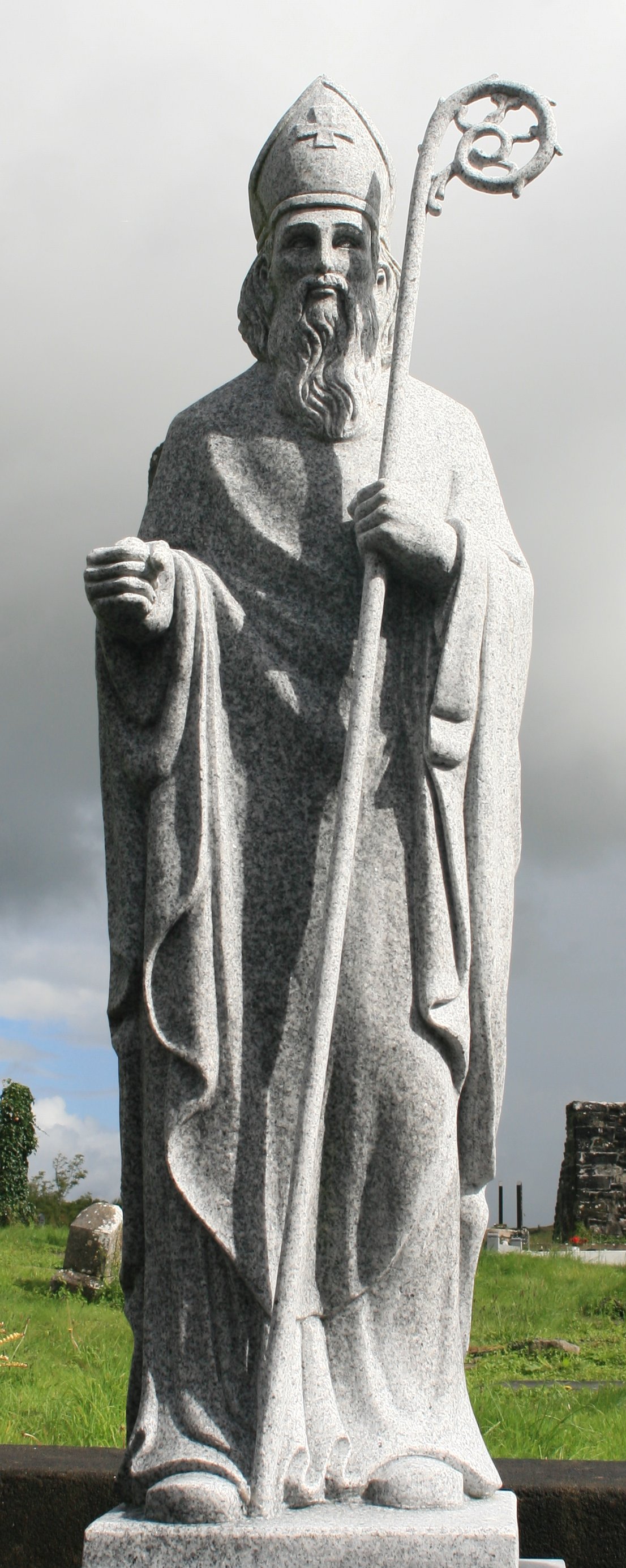
Happy Saint Patrick's Day!!! An Immigrant Holiday!


Happy Saint Patrick's Day! In past years, I have written about the religious nature of Saint Patrick's Day. Patrick was a remarkable missionary and a hero of the Christian faith. There are many blogs today celebrating that aspect of the day.

There is another aspect of Saint Patrick's Day that I will tackle today. Saint Patrick's Day is largely an immigrants holiday. I saw an interview with Paddy Moloney of the Chieftains saying how he preferred to spend Saint Patrick's Day in the US. In Ireland, it was largely a religious holiday. In the US, Saint Patrick's Day is a party. In the US, Saint Patrick's Day is more a celebration of Irish heritage than it is about the saint. It demonstrates the impact that a group of immigrants can have on a culture and a nation.

Irishmen were among the first colonists in the New World. They came to the New World in various employs of the British government and venture corporations. Later, Irishmen came to America to escape the oppressive and difficult life of Ireland. Ireland was ruled by a landed gentry that was British or appointed by the crown. The aristocracy of Ireland was thoroughly loyal to the crown and far removed from the majority of the Emerald Isle. The disparities became blatantly obvious when the primary food crop for the poor was destroyed.

Around 1845, the potato crop of Ireland was destroyed by blight. A large portion of the poor in Ireland relied upon the potato. To make matters worse, Ireland experienced a severe winter in 1846-47 that exacerbated the problem. The resulting famine added to the many points of conflict between the Upper and Lower classes. The lower class was mostly composed of Catholics that faced discrimination under British law. They were not fairly represented in Parliament. And while the poor starved in the streets, the wealthy ate sumptuously. There were other food crops in Ireland, but they were most exported to the foreign markets and overseas British colonies. The overall result was that over a million Irish died of malnutrition over a ten year period. Another million left Ireland to settle in the US, Australia, and other friendly nations. The disparities and injustices that occurred during the famine also contributed to the growing Republican movements that would lead to Irish freedom.

The response to the famine in the US was varied. When the Irish Famine began, the US was involved in a war with Mexico. Funds were raised across the US, and the first international relief effort by the United States was mounted. The sloop-of-war USS Jamestown was disarmed and filled with food.
American aid saved lives and started an American tradition of helping those in need. Americans were happy to send aid to Ireland, but as the Irish started arriving in American ports, things changed.

The Irish that came off the boats during the Great Famine were impoverished and malnourished. They dressed in worn and outdated clothing. Newspaper editorials portrayed the waves of Irish arriving on American shores as animalistic, backwards, uneducated, and immoral. They looked funny and worse yet, they were Catholic. Helping the Irish in Ireland was fine, but America didn't want any more Irish in America. Eventually, American ports started to close to ships coming from Ireland. The Irish were berated and belittled. Amazingly the caustic caricatures remain to this day (it's okay to use comic, demeaning Irish stereotypes in Saint Patrick's Day graphics on the local news, but they wouldn't dare wear black face or use minstrel show figures during February). This is an actual cartoon from Harper's Weekly, the Journal of Civilization.

The Irish were forced into the poorer districts of the cities, but they banded together. Before long the Irish were the business owners, politicians, and even in charge of organized crime! The Irish took the jobs that no one else would take. They loaded cotton bales on the Mississippi, a job considered too hazardous for slaves. They worked the bayous of Louisiana, mined coal in the Appalachians, and built the railroads. The Irish fought on both sides of the Civil War and rebuilt the nation in Reconstruction. The Irish that settled in the US were transformed by America and also transformed America. Saint Patrick's Day is a celebration of how much the Irish have contributed to the fabric of the United States. It is also a promise to immigrants today and for the future.

My great-great-grandfather came from Ireland during the Great Famine. He settled in Georgia just in time for the Civil War. Like many of the Irish he became a part of the fabric of America. The history of the United States is a history of the immigrant finding a home. Saint Patrick's Day in the United States is testimony of the impact immigrants can have on the nation.

Friday, March 6, 2015

Bad Judgment


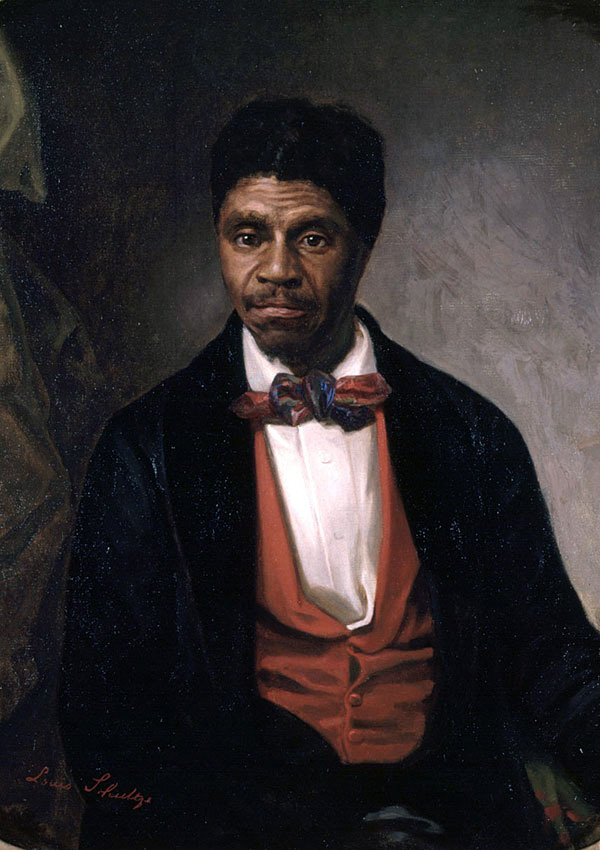
On this day in 1857, the Supreme Court of the United States delivered their decision in the Dred Scott versus Sandford case. The court ruled against Scott and essentially ruled that slaves were not citizens of the United States. Slaves could not bring suit in Federal courts and limited the Federal government's role in regulating slavery in states established after the adoption of the Constitution. It was considered a major setback for abolitionists. While Chief Justice Roger Taney hoped that the ruling would settle the slave question, it helped prepare the way for the Civil War.

It is important to keep in mind that slavery was a legal institution under the Constitution of the United States. The court was upholding a Constitutionally protected institution that existed prior to the founding of the nation. Many legal scholars debate whether the court rendered the correct judgment. However, they approach the question with modern morality that abhors slavery (most of the time). But prior to the American Civil War the morality of slavery varied across the country. A significant number of Americans supported slavery as beneficial and necessary. Slavery was affirmed as legal, moral, and justifiable by the Constitution, public opinion, and the Supreme Court. Not everyone agreed with that. The Dred Scott case mobilized abolitionists, especially within the Republican party. The mobilization would eventually lift Abraham Lincoln to the White House and spark the Civil War.

Today we recognize that pro-slavery opinions were wrong. The Supreme Court only rules on what is legal under the Constitution, but they don't always rule on what is moral. Often the Supreme Court is considered the final arbiter. If Republicans had considered the Supreme Court the final arbiter in the 1850s, then slavery would have continued for several more decades. Many Americans recognized that the ruling of the Supreme Court was supporting something evil. They continued to work hard to end slavery in the United States. We should recognize that the Supreme Court and public opinion can be swayed to immoral positions that are acceptable to society. That does not make it right. Our standards for morality must come from a higher position and authority.

Sunday, March 1, 2015

The First American Confederacy


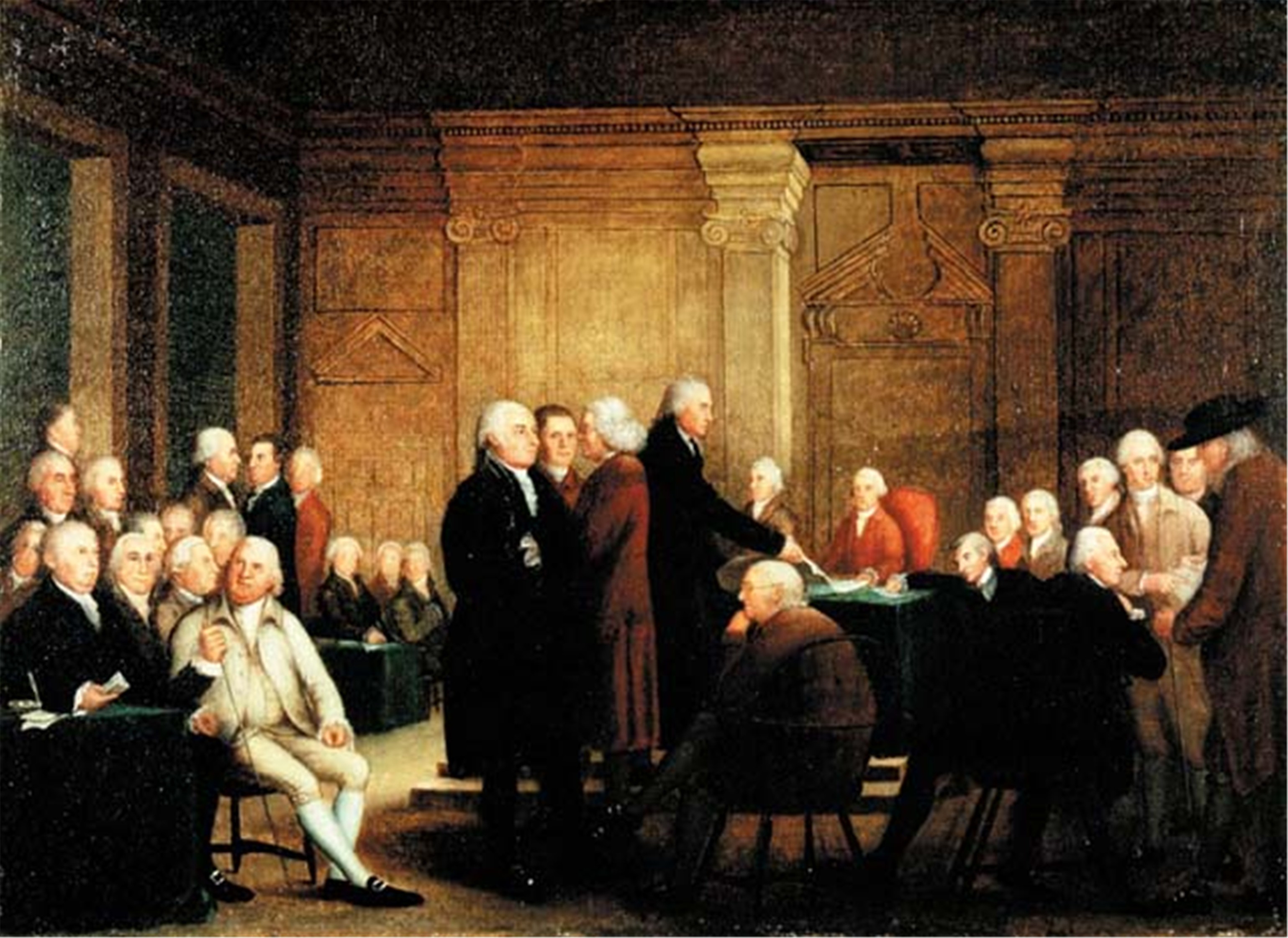
On this day in 1781, the Articles of Confederation and Perpetual Union was ratified by the original 13 colonies. This document was crafted by the Second Continental Congress and formally established The United States of America. The document was drafted in 1776 and sent to the states for ratification in 1777. Some of the states were slow in ratifying it and, of course, there was the matter of a revolution. This document established the government that fought for independence from Great Britain.

The government established by the Articles of Confederation was a weak central government. Its primary duties were foreign affairs. The federal government took the responsibility to wage war, negotiate with foreign powers, and appoint ambassadors. The states were responsible for levying the taxes to run the government. The predominant power remained with the states though states agreed to share a common law. The Federalists thought this too weak a form of federal government and pressed for a new government document. Their objections led to the creation of United States Constitution, which was ratified on June 21, 1788.

The Articles created the office of President of the United States in Congress Assembled. Essentially, the president was the presiding officer of Congress and chaired the Committee of States, the government body that ran things when Congress was not in session. This arrangement was quite different from the office of the President under the US Constitution. Still, the leader of Congress was called the President, and you probably did not learn his name in elementary school. The first US president under the Articles of Confederation was Samuel Huntington. History is far more complicated than most people realize, and there are many great men who founded the US that are largely forgotten.

Saturday, February 28, 2015

The First Rednecks


On this day in 1638 the National Covenant was signed in Edinburgh, Scotland. It was one of many covenants adopted by the Scots regarding the liturgy and polity of the Church of Scotland. Liturgy refers to the manner in which a worship service is conducted. Polity refers to the how the business of the church is conducted and by whom. The King of England, Charles I, and the Archbishop of Canterbury, William Laud, wanted the Church of Scotland to conform to the Church of England. Scotland was under the authority of King Charles, and he was in charge of the church. The King preferred the Episcopal structure with a hierarchy of bishops. It made sense for the church to be uniform across the kingdoms. The Scots disagreed. They favored a system that would become the Presbyterian Church (To my church history friends: I know this is an oversimplification).

Many of the Scots preferred the liturgy and polity of the Calvinist Reformers. They signed the covenants to show their dedication to their vision of the Church of Scotland. It was a serious matter tying religion and politics together that didn't always work well. Some of the Covenanters, as those who signed the National Covenant were known, also rejected the authority of Charles I. They tied the covenant to Scottish Nationalism. However, there were many Scots who wanted to remain loyal to Catholicism. Violent conflicts would eventually break out between Scottish Separatists and Loyalists as well as Protestants and Catholics. The entire event demonstrates the danger of state churches.

Eventually, the Covenanters did establish the Presbyterian Church as the dominant church of Scotland.  Predominantly drawn from the poor and lower classes, the Covenanters were criticized as unruly and uneducated by the Loyalist upper classes. The Covenanters were dedicated to their cause and put their lives on the line for their faith. Many of the Covenanters signed the National Covenant and the covenants that followed it in their own blood. To show their convictions, they wore red cloths tied around their neck. The Loyalists started calling the Covenanters "Rednecks." Though intended as an insult, the Covenanters adopted the name with pride. For many years in Scotland, Redneck became synonymous with Presbyterian. The first Rednecks were Scots who boldly proclaimed their faith as Reformed Protestants.

Sunday, February 22, 2015

The White Rose

On this day in 1943, Hans Scholl, Sophie Scholl, and Christoph Probst were executed by the Nazi government. The three were members of a resistance group known as The White Rose.


Hans Scholl had been a member of the Hitler Youth, but after growing disillusioned he quit and began to explore avenues banned by the Nazi Regime. Drafted in 1939, he served in the medical corp of the Wehrmacht. He also attended medical school at the Ludwig-Maximilians-Universität München. Hans initially supported the war effort as a typical patriotic German. However, he quickly became disillusioned with the war as he saw atrocities committed in France, Poland, and the Soviet Union. Along with some friends, Hans formed a group opposed to the Nazi government. They secretly distributed leaflets appealing to the intelligentsia of Germany to reject Hitler and Fascism. The leaflets quoted from the Bible, philosophers like Aristotle, and writers like Goethe. The most destructive activity the White Rose engaged in was graffiti. 

On February 18, Hans and his sister Sophie distributed White Rose pamphlets at the University of Munich. Though usually cautious, this time they were seen by a janitor who was also a member of the Nazi party. He immediately called the Gestapo, and the two were arrested. After they had been searched, evidence was found implicating another member of the group named Christoph Probst. 

On February 21, Hans Scholl, Sophie Scholl, and Christoph Probst were brought to trial before Judge Roland Freisler of the People's Court. Freisler was brought in from Berlin to ensure a guilty verdict. Though Probst asked for mercy on account of his sick wife, he was shown none. All three were condemned as traitors. There was supposed to be ninety days from the time of the judgment till the sentence was carried out, but the Nazis expedited the process. They were executed on the February 22 in Munich. On his way to the guillotine, Hans Scholl shouted, "Long live freedom!"

Both Hans and Sophie Scholl were raised in a devout Lutheran home. Though neither was overzealous in their faith in their youth, they were guided to resistance by their Christian faith. They bravely stood for righteousness when so many were willing to turn a blind eye to the crimes of the government. 

Too few people know about the White Rose Movement outside of Germany. In Germany, the martyrs of the White Rose are regarded as heroes. There are many books and movies about their brief lives. I highly recommend the film Sophie Scholl - Die letzten Tage made in 2005. It is in German with English subtitles and was available on Netflix. 

Saturday, February 21, 2015

An Exile for Christ

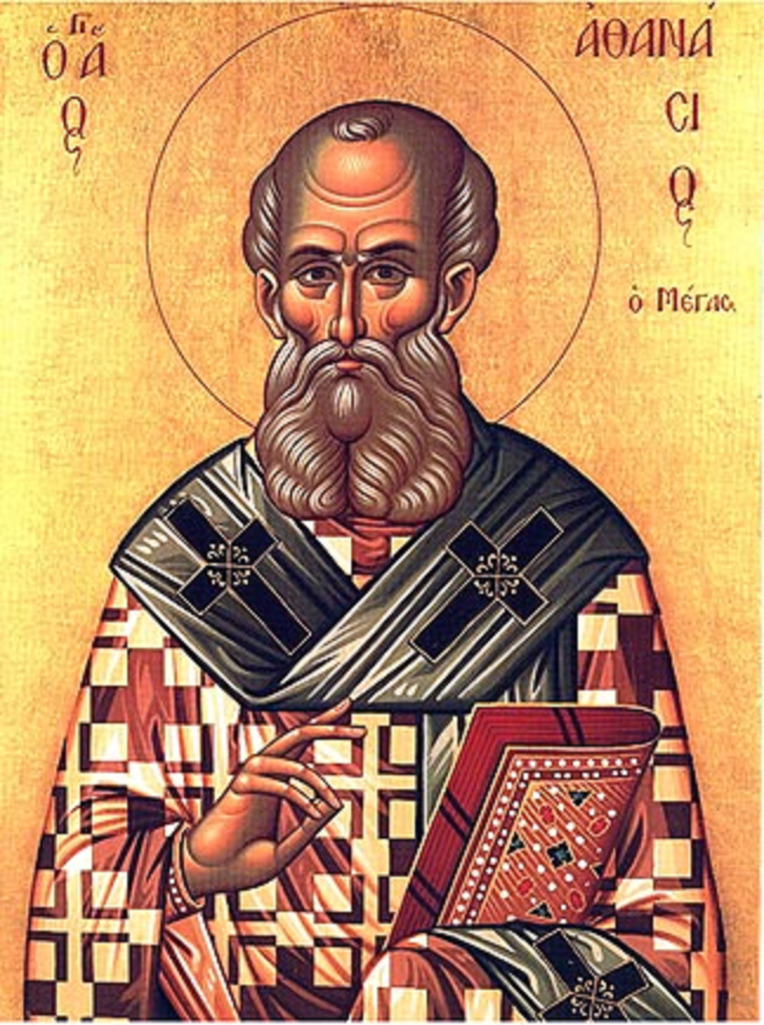
On this day in 362 AD, Athanasius returned to Alexandria as his third exile came to an end. He had been in exile for six years in Upper Egypt evading arrest. He was about 65 years old when he returned from exile, but this would not be his last exile. He would be exiled two more times for various lengths of time and would die in 373.

Athanasius of Alexandria was the assistant to the Bishop Alexander of Alexandria at the Council of Nicaea. Athanasius would succeed Alexander as the Bishop of Alexandria. He would also take up his mentor's battle for orthodoxy in the church. Athanasius was well educated and well liked by the people. He was a Greek scholar, a textual critic, and expert theologian. If he had minded his own business, he probably would have been left alone in his city. However, Athanasius was dedicated to God and orthodoxy. He was a prolific author and he ably defended the doctrine of the Trinity. 

Athanasius of Alexander was a man that remained committed to God even when the world was against him. Several Roman Emperor's favored the heresy Arianism, but Athanasius wholeheartedly stood his ground against the false teaching. He never wavered in his commitment, even though it led to life-threatening conflict and exile. Athanasius could have experienced fame and comfort, but chose his commitment to God over the pleasures of the world. 

When the pressure comes to compromise our convictions, let us look to Athanasius. He stood his ground in faith and led the church toward orthodoxy. 

Friday, February 20, 2015

What's in a Name?: Deus vult!

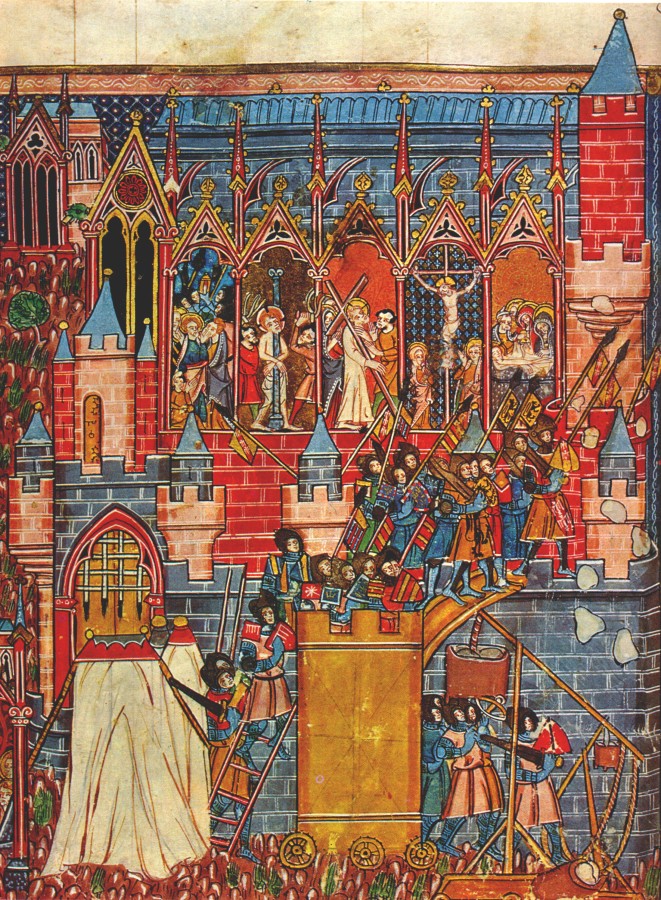
The name of this blog is the combination of two mottos or battle cries. At the moment, I will focus on the first slogan: Deus vult! Deus vult is Latin for "God wills it" and was the battle cry of the Crusades. The Crusades were a series of events in history that are both fascinating and controversial. Often they are reduced to a caricature and their true nature is overlooked. In Western history, the crusades were often regarded as a heroic, though doomed effort. In the Mid East, the Crusades are portrayed as an evil endeavor that was ultimately overcome by God's heroic warriors. In recent years, the term Crusade has fallen into disrepute as it symbolizes European colonization and oppression. All of these approaches are problematic as they discard actual history and the lessons we can learn from it.

It is important to understand that, like all historical events, many factors led to the Crusades. The destruction of Christian Holy Sites, as well as the harassment of Christian pilgrims, contributed to a growing outrage amount European Christians. The catalyst that launched the Crusades was a  request for help from the Byzantine Emperor. The Byzantine Empire was the old Eastern Roman Empire, but it was under increasing assault from the Ottoman Empire. Though there was a great deal of tension between the Byzantine Empire and Western Europe, the Byzantine Empire was still within the realm of Christendom. The Byzantines wanted the West to open a new front against the Ottoman's in order to relieve some of the pressure against them. This endeavor also appealed to a dream of restoring the Holy Land to Christian control. In 1095, Pope Urban II issued a declaration for an endeavor to take back the Holy Land.


Unfortunately, the efforts of the Crusaders largely ended in failure. Though Crusaders did conquer the Holy Land and establish temporary kingdoms, they were eventually overwhelmed by Islamic forces. Perhaps the worst part of the entire effort befell the Byzantine Empire. The capital of Byzantium, Constantinople, was sacked by the Crusaders. Then it was conquered by the Ottomans. The Byzantine plan to save their empire led to their demise.

That is a condensed history, and there are specific elements I will address in the future. At the moment, though, my focus is on the motto of the Crusades: "God wills it." They truly believed that they were doing the work of God and that God would give them the victory. But the results would indicate that God did not will it. Ultimately the Crusades sought to solve a problem that could not be solved with a sword. Evangelists were needed, not knights. The church sought to solve a Spiritual challenge with worldly methods, and the results were disastrous. We must make sure that our methods are as righteous as our objectives. The ends do not justify the means if the means are abhorrent to God. We must be very careful in claiming God's sanction on our goals and activities. The battle cry of "Deus vult" should remind us that we cannot claim God's authority for something that we want, while ignoring the actual commands of God.

Thursday, February 19, 2015

Marked for Christ


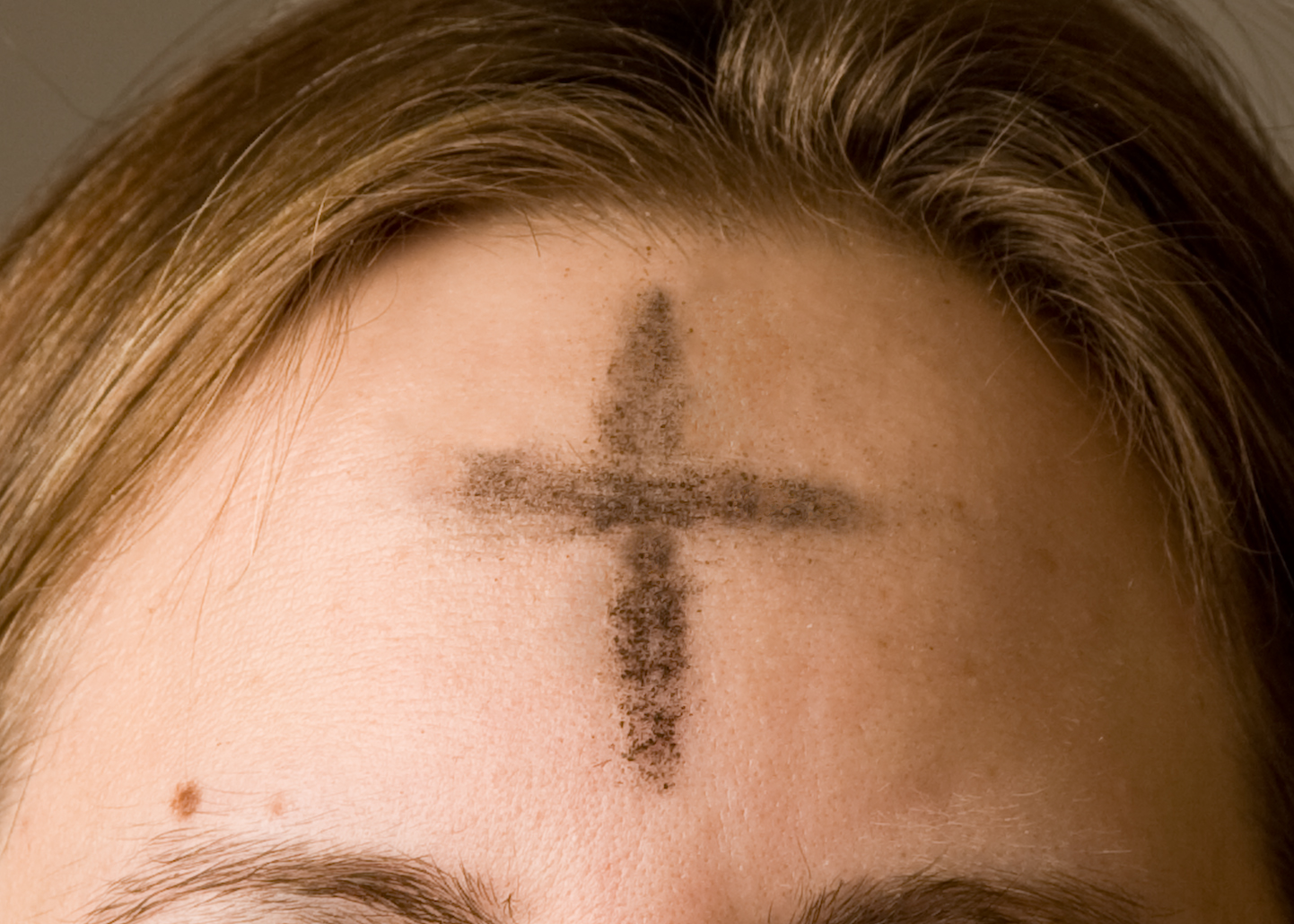
Last night as I was watching the news I saw many people with ash upon their foreheads. On Ash Wednesday Catholics and others involved in liturgical tradition are marked with ash. It is a declaration of their faith and participation in the Lenten season. Traditionally Baptists and other members of the Radical Reformation do not participate in these traditions and cite Matthew 6:16-18 as their reason to refuse wearing ash. As a Baptist, I think we have the right interpretation, but too often we make no external sign of fasting because we are not fasting at all.

One of the positive aspects of the mark of ash is identifying with the body of Christ. That mark proclaims that you belong to Jesus. Many people take that mark as merely ritual, and it does not have daily significance for them. Rather than being marked once a year for Christ, we should wear our mark daily. Paul spoke of his marks in Galatians 6:17: From now on let no one cause me trouble, for I bear on my body the marks of Jesus (ESV). Paul was not speaking of ashes on his forehead but of the physical scars he had received because of serving Christ. Paul lived daily to demonstrate Christ in his life, and that resulted in real wounds. Many of our brothers and sisters in Christ still receive physical marks if they demonstrate they are true Christ followers.

Many of us, though, are fortunate that we will never face physical persecution for our beliefs. But we still need to wear the mark of Christ daily. We need to live a life that demonstrates in word and deed our submission to Jesus. We need to live obediently to the commands of Christ and let our light shine in a dark world. People should know that we are Christians, not by the t-shirts and jewelry that we wear, but by the love that we show for one another (John 13:35).

Wednesday, February 18, 2015

Headed to the Cross

Today is Lent, also known as Ash Wednesday. For many, it is the day to recover from Mardi Gras. However, it seems that many people are excited about Mardi Gras, but they want to skip Lent. On a local news broadcast, they were announcing the events of the week. They made a big deal about Fat Tuesday but didn't even mention Lent.

On the Liturgical calendar, Lent is the major event of the year and is of far greater significance than Mardi Gras. Many churches discard the Liturgical Calendar regarding it as a Catholic thing. There are, however, many Protestants that use the Liturgical Calendar, and the Calendar can be a useful tool for the development of Spiritual disciplines.

Lent is an opportunity to think intentionally about Easter. The cross was not an accident but was the plan of God for the redemption of mankind. The first sign in the Gospel of John is the miracle at the wedding in Cana. Mary, the mother of Jesus, asks Jesus to help with the wedding. In John 2:4, Jesus responds, "My hour has not yet come." Throughout John, the term "hour" pops up in different places. Hour is a reference to the cross, and the Gospel of John is on a trajectory to the cross. Jesus was aware of the hour, and that guided his revelation to the world.

Christians are supposed to celebrate the Resurrection every Sunday, but there is a special emphasis on celebrating the Resurrection at Easter. As we approach Easter, we need to reflect on our need for the cross and the impact that it has on our life. Even though many of us do not follow the Liturgical Calendar, we should use this as a time to prepare our minds and hearts for Easter. In doing so, we will also increase our spiritual disciplines and our walk as disciples.

Tuesday, November 25, 2014

Keeping a Christmas Attitude


You stand in line for what seems like an eternity. You approach the check out counter and drop your bargains in front of the haggard sales associate. At that very moment the computer system malfunctions and the clerk has to call for assistance from a manager already dealing with a problem on the other side of the store. Or one of the items you have chosen rings up with the incorrect price and the store associate does not the ability to override the price on their own authority. How do you react?
Shopping at Christmas can be an exhausting and frustrating experience. Fighting over parking spaces or over the limited selection of sales deals can inflame tempers. There comes a point when the least little grievance can trigger a wave of anger and an unkind outburst. Often it comes over something as small as a store employee saying the wrong greeting.
The true spirit of Christmas is not just found in whether people say "Merry Christmas" instead of "Happy Holidays." Keep in mind that big box store associates are instructed what to say and must keep with the script or lose their job. Often they have worked long hours for a low salary and dealt with very difficult customers. The last thing that they need is another Grinch venting their frustrations.
Instead of griping about people not showing the real spirit of Christmas, start showing mercy. Christmas is the revelation of God's mercy to the world. Christians should exemplify that mercy even in the most difficult situations. Here are some actions we should be doing as we shop:
1) Smile. It is the easiest action that brings the biggest return. A smile improves your own attitude as well as those around you.
2) Give a pleasant greeting. Sales associates are people too. They need a kind word on a difficult day as much as you do.
3) Be proactive in wishing people a Merry Christmas. When you say Merry Christmas first it gives an associate permission to respond in kind.
4) Remember that you are blessed. Most of our Christmas problems are First World problems. Look for ways to help the less fortunate.
5) Remember, "Do unto others as you would have them do unto you."

Celebrate Christmas by showing mercy and loving your neighbor.

Friday, August 8, 2014

Anticipating the Plague


The announcement that Ebola patients were being transported to the United States made me nervous. Ebola is one of the most dangerous viruses in the world. There is no cure for the disease and it has a fatality rate around 90 percent. Currently the best way to deal with Ebola is containment. Quarantine is the traditional and most effective means of dealing with a virus. Isolate the area of contamination and let the virus burn itself out. Though effective, it is not foolproof and it is also cruel. At times it requires a level of callousness that simply consigns people to die a horrible death. Quarantines, though, are becoming more difficult in our modern transit age. SO, is it wise to intentionally bring infected people into a country that has not had a single case of Ebola?

There are dangers in transporting Ebola patients into the US. Ebola is not airborne and if proper steps are followed it can be contained. But humans are notorious for making mistakes. The missionary from SIM did not have direct contact with patients, but was infected because of failure in safety protocols. There is always the threat of a mistake that will have horrific ramifications. And by the time the mistake is realized hundreds of people may be exposed to the virus. The ones who worry me most are those who claim there is no significant threat. Rational fear is a good thing and those who dismiss any fear are those who are prone to mistakes brought on by hubris. 

A virus is not a sentient being (despite what you may see in movies), but the virus follows a biological imperative to spread. The nature of a virus is to reproduce and it will adapt to fulfill its imperative. At the moment the Ebola virus is stable, but there is the possibility that it may adapt and become more contagious. It is an unlikely scenario, but with a virus this deadly every scenario must be kept in mind. 

There is also a historic note that worries me. Nearly a hundred years ago the world was ravaged by a mysterious virus known as the Spanish Flu. The 1918 Flu Pandemic killed somewhere between 3 and 6 percent of the world's population (perhaps as many as 100 million). That variation of the flu, which actually originated in China, was spread because of mass transit. Soldiers and laborers were transported to meet the needs of armies in World War One. The infection spread among those deployed in the war and then they took it back home with them. Public transportation and crowded public venues helped to spread the virus throughout urban populations. The same elements helped spread the SARS virus in urban Asian cities. There is not a direct correlation between the 1918 flu pandemic and the current Ebola outbreak, but is does paint a bleak picture of what can happen with an uninhibited virus.

HOWEVER, there are some good reasons for bring back the two infected missionaries back to the US. First, these are people who are dedicated to help others and every effort should be made to save them from the disease. Though Ebola has a high mortality rate, it can be survived with the right type of support. Basically, victims need support to keep them hydrated and to keep organs from failing. Primitive hospitals lack the equipment and personnel to meet the needs of large outbreaks. A modern, well staffed hospital can meet the needs for a handful of patients. The best hope for any victim would be a First World hospital. It would be impractical to bring all the Ebola patients to the First World and such a course of action would eventually overwhelm available resources. Epidemiologists have to be selective in who they bring out of Africa. At the moment a Spanish priest has been evacuated to Spain and two Americans have been brought to Atlanta. 

The evacuations are more than an attempt to save medical missionaries. Emory is an university hospital and as a university hospital they not only train doctors, they also perform cutting edge research. Many First World hospitals (or even medical ships)  can treat Ebola, but few facilities are equipped to cure it. I have no doubt that part of the motivation to bring the Ebola patients to Emory is to find a cure (and earn a Nobel Prize). If the two infected missionaries survive the virus it will provide needed data to create a vaccine. The expense and risk of bringing the Ebola patients to Emory will be worthwhile if a solution can be developed. 

Intentionally bringing Ebola patients into the US is risky. However, history demonstrates that Ebola will make its way into the US at some point. Global air travel guarantees the spread of viruses. At some point an Ebola carrier will enter the US undetected. By the time the disease is diagnosed hundreds will have been infected. The best way to head off this threat is find a treatment before that event transpires. The treatment of the two Ebola patients is still the best hope to protect the US population and to provide hope for the infected in Africa. 

Connecting the Dots


In May 2001 the Taliban announced that all non-Muslims in Afghanistan would be required to wear tags identifying that they were non-Muslims. The announcement brought immediate condemnation from nations around the world. India objected because the Hindu minority was being targeted. Christians around the world worried about churches being attacked. Germany objected because it was too similar to the treatment of Jews during the Nazi regime. The Taliban responded that since Afghanistan was under Sharia law that it was necessary to identify non-Muslims to protect them from enforcement of laws that applied only to Muslims. No one really believed them.
Earlier that year the Taliban had destroyed two large Buddha statues because they violated Muslim rules concerning idolatry. These large carvings were considered an international treasure and a great deal of furor was raised over the demolition of these monuments. But beyond the international outcry, nothing happened.

These were isolated events in a foreign nation. The Taliban were in a backward country and lacked the means to be a significant threat to anyone outside of their region. Political pressure was the best way to deal with them and the international community would keep an eye on them. That response was ill advised. In September the world learned how far the Taliban and their ally Al Qaeda could reach.

Fast forward to July 2014 and we see a similar event occurring in Iraq. In Mosul ISIS has ordered that all Christians must either convert to Islam, leave, or die. ISIS members have spray painted the Arabic letter N on the homes of Christians to insure that none are missed. ISIS has also destroyed important Christian sites such as the Tomb of Jonah and converted churches into mosques or outright destroyed them. The international community has been outraged, but little is being done.

There is a pattern that is easily discernible in these events. Fundamentalist Muslims will always seek to identify and mark those who are outside of Muslim. These markings are no different from the Star of David marks used by the Nazis to identify Jews. The purpose is to make it easier to round them up for execution when the final plan is put in place. They will also destroy any historic site outside of their faith. They cannot tolerate the presence, even symbolic, of a different worldview.

The important thing to keep in mind is that a worldview is involved. Al Qaeda, ISIS, and their brethren are never content to keep their beliefs to their region. They will always reach out to challenge any worldview that does not match their own. They truly believe that they are on a mission from God. At the moment ISIS is not a threat to the United States. Many are war weary and do not want to put any effort into confronting ISIS or other radical terrorists. Many, though, will change their minds when a few thousand Americans die in another terrorist attack. Terrorists are ambitious, well financed, and dedicated to a cause. They will not stop with the take over of Iraq or Afghanistan. The Taliban already views the US withdrawal from Afghanistan as a victory. ISIS believes that they have chased the US out of Iraq. They will try to capitalize on their victories and expand their borders. We must keep a watchful eye on these areas and do everything in our power to stop them. That does not necessarily mean military action, but military options must be kept within the toolbox of dealing with volatile regions. We need to be proactive with these threats because the cost is too high to deal with them as a reaction.

Saturday, July 12, 2014

Why Bullying Won't Go Away


For the past several years there has been a major media campaign to end bullying. From the White House to public service commercials we have been told how bad bullying is and that no one likes a bully. In principle I doubt anyone would object to the aim of the campaign. It is not fun to be picked on and the social media age has amplified the damage that comes from taunting.

In reality, though, bullying is not going away. First, what is often portrayed as bullying is a stereotypical image of bullying that comes largely from TV, not real life. In real world situations it is often hard to distinguish playful banter from actual insults, both by the participants and observers. Traditionally boys always give their peers, especially their best friends, a hard time. Further, the social structure of groups is far more complex than the TV portrayals. The role of bully and victim can change frequently and sometimes within the same day. The child that is bullied one moment may bully someone else the next. For example, borrowing from TV stereotypes, Bart Simpson is frequently bullied by Nelson, but Bart in turn bullies Milhouse even though Milhouse is his devoted lackey. Bart has also turned the tables a few times and bullied Nelson. Milhouse has also bullied Bart and other characters when he was given the advantage. Rarely is there actually one arch-typical bully, but bullies vary on who has the advantage in a given situation.

This past week an example of the lasting spectre of the bully emerged on ESPN. It is a common practice for cameramen to pan across the audience of sporting events. Supposedly they are surveying crowd reaction to certain aspects of the game, but in reality they are looking for silly, funny, or dumb people or events to evoke humor on the broadcast. In other words, they are intentionally looking for people to mock. During a Boston/New York game a cameraman found a gold mine. One fan, Andrew Rector, was caught napping in the stands. Not only did the game commentators mock Rector, but they came back to him more than once to mock him. Rector was then put on ESPN's website for further ridicule and became a highlight on multiple sports broadcasts. Further, comments about Mr. Rector from baseball fans have been visceral and cruel. Mr. Rector has filed a lawsuit, but Major League Baseball and ESPN point out that the back of the ticket warns that if you are hit by a ball or mocked on national TV it's your own fault.

But consider for a moment that this is the textbook definition of bullying. An overweight individual was mocked by a group of athletes. Many justify their insults by pointing out that he fell asleep during a baseball game. I would counter, who hasn't fallen asleep in a baseball game? But that is beside the point. I don't know Mr. Rector, but there are many plausible reasons why he may have fallen asleep. He may have narcolepsy or sleep apnea. Both are common ailments for overweight people. If he is diabetic his blood sugar may have been off and that could also have caused drowsiness. Perhaps he has been under a great deal of stress and came to the game to relax. He may have nodded off due to exhaustion. These are possibilities. Bullies don't care about those reasons because they are not being empathetic. Those broadcasters didn't consider any medical or other reasonable explanation for his dozing, instead their childhood tendency to mock the fat kid arose. Instead of being chastened by the rest of the media, who supposedly oppose bullying, news directors and producers piled on for fun.

I doubt Mr. Rector's lawsuit will go very far. ESPN and MLB have plenty of lawyers and written justification for their behavior. They don't have the moral high ground, but legality and morality are two different realms. Besides, the public, which cries out against bullying, has sided with the jocks. Bullying is not going anywhere.